

Hey there! I'm part of a grit classifier supplier team, and I'm super stoked to walk you through how a vibrating grit classifier works. If you're in the market for a grit classifier or just curious about the tech behind it, you're in the right place. And by the way, if you want to check out our Grit Classifier, just click on the link.
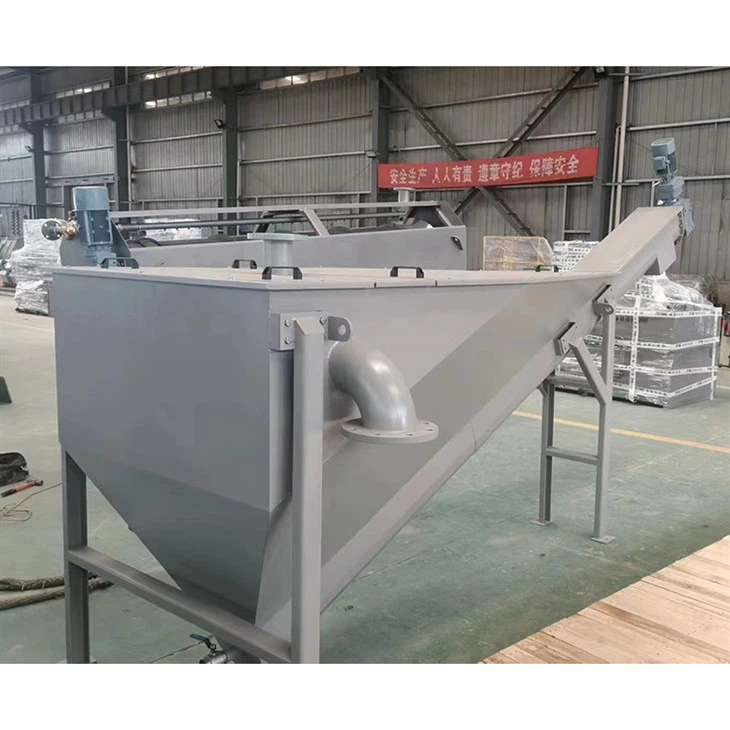

The Basics of a Grit Classifier
First off, let's talk about what a grit classifier is and why it's so important. Grit classifiers are used in a bunch of industries, like wastewater treatment, mining, and food processing. Their main job is to separate grit, which is basically small, heavy particles like sand and gravel, from other materials in a mixture. This separation is crucial because grit can cause a lot of problems if it's not removed. For example, in a wastewater treatment plant, grit can damage pumps and other equipment.
The Vibrating Action
The key feature of a vibrating grit classifier is, well, the vibration! The classifier has a vibrating mechanism that makes the whole unit shake. This vibration serves a few important purposes.
1. Material Movement
The vibration helps move the material along the classifier. When the mixture of grit and other stuff enters the classifier, the vibrating action propels it forward. It's like a conveyor belt, but instead of a moving belt, it's the vibration that does the job. This continuous movement ensures that the material is constantly being processed and doesn't just sit there.
2. Separation Process
The vibration also plays a huge role in the separation process. As the material moves along the classifier, the grit, being heavier, tends to settle to the bottom. The vibration helps speed up this settling process. It shakes the mixture in such a way that the heavier grit particles sink down while the lighter materials stay on top.
Think of it like when you're making a salad dressing. If you let the oil and vinegar sit in a jar, they'll eventually separate, but if you shake the jar, the separation happens much faster. That's exactly what the vibration does in a grit classifier.
The Screening Mechanism
In addition to the vibration, a grit classifier also has a screening mechanism. This usually consists of one or more screens with different-sized openings.
1. Size-Based Separation
The screens are designed to separate the material based on particle size. As the vibrating action moves the material over the screens, the smaller particles pass through the openings in the screen, while the larger ones stay on top. This is important because different industries may have different requirements for the size of the grit they need to separate.
For example, in a mining operation, they might want to separate out large chunks of rock from the finer grit. The screens can be adjusted to allow only the desired size of grit to pass through.
2. Multiple Screens
Some grit classifiers have multiple screens stacked on top of each other. This allows for more precise separation. The material first passes over the top screen, which catches the largest particles. Then, the smaller particles that pass through the top screen move on to the next screen, which has smaller openings. This process continues until the material is separated into different size fractions.
The Role of a Screw Conveyor
Now, let's talk about the Screw Conveyor. In many grit classifier systems, a screw conveyor is used to transport the separated grit out of the classifier.
1. Grit Removal
Once the grit has been separated from the other materials, the screw conveyor comes into play. The screw inside the conveyor rotates, and as it does, it grabs the grit at the bottom of the classifier and moves it towards the discharge point. This ensures that the separated grit is efficiently removed from the classifier and can be collected for further processing or disposal.
2. Continuous Operation
The screw conveyor allows for continuous operation of the grit classifier. As long as the mixture is being fed into the classifier and the vibration and screening are working properly, the screw conveyor will keep removing the separated grit. This means that the classifier can run for long periods without interruption, which is great for industries that need to process large volumes of material.
Advantages of a Vibrating Grit Classifier
There are several advantages to using a vibrating grit classifier.
1. High Efficiency
The combination of vibration and screening makes the separation process very efficient. The vibration speeds up the settling and movement of the material, while the screens ensure accurate size-based separation. This means that the classifier can process a large amount of material in a relatively short period of time.
2. Low Maintenance
Compared to some other types of separation equipment, vibrating grit classifiers are relatively low maintenance. The vibrating mechanism and screens are simple in design and don't have a lot of moving parts that can break down. This reduces the need for frequent repairs and replacements, which saves time and money in the long run.
3. Versatility
Grit classifiers can be used in a wide range of industries and applications. Whether you're dealing with wastewater, mining ore, or food products, a vibrating grit classifier can be customized to meet your specific needs. You can adjust the vibration intensity, screen sizes, and other parameters to optimize the separation process for your particular material.
How to Choose the Right Grit Classifier
If you're thinking about buying a grit classifier, there are a few things you need to consider.
1. Capacity
First, you need to determine the capacity you need. This depends on how much material you need to process per hour or per day. If you're running a large-scale operation, you'll need a classifier with a high capacity. On the other hand, if you have a smaller operation, a smaller classifier will do the job.
2. Particle Size Requirements
You also need to consider the size of the grit particles you need to separate. Make sure the classifier you choose has screens with the appropriate openings to meet your size requirements.
3. Industry-Specific Needs
Different industries have different requirements for grit separation. For example, in the food industry, you need to make sure the classifier is made of food-grade materials and meets all the relevant hygiene standards. In the mining industry, the classifier needs to be able to handle large volumes of heavy material.
Contact Us for Your Grit Classifier Needs
If you're interested in learning more about our grit classifiers or have any questions about how they work, we'd love to hear from you. Our team of experts can help you choose the right classifier for your specific needs and provide you with all the information you need. Whether you're just starting to look into grit classifiers or you're ready to make a purchase, we're here to assist you. So don't hesitate to reach out and start the conversation about how we can help you with your grit separation requirements.
References
- Perry, R. H., & Green, D. W. (Eds.). (2008). Perry's Chemical Engineers' Handbook. McGraw-Hill.
- Metcalf & Eddy. (2014). Wastewater Engineering: Treatment and Resource Recovery. McGraw-Hill.