

As a supplier of conveyor equipment, I understand the growing demand for energy - saving solutions in the industrial sector. Conveyor systems are integral to many industries, from mining and manufacturing to food processing and logistics. In this blog, I will explore the various energy - saving modes of conveyor equipment and how they can benefit your business.
Variable Frequency Drives (VFDs)
One of the most effective energy - saving technologies for conveyor equipment is the use of Variable Frequency Drives (VFDs). A VFD allows the motor of the conveyor to run at different speeds based on the actual load requirements. Instead of running the motor at a constant, full - speed all the time, the VFD can adjust the speed according to the amount of material being transported.
For example, in a warehouse conveyor system where the flow of goods is intermittent, a VFD can slow down the conveyor when there are fewer items to move. This not only reduces the energy consumption of the motor but also extends the lifespan of the conveyor components. When the demand increases, the VFD can quickly ramp up the speed to handle the higher load.
According to industry research, the use of VFDs can result in energy savings of up to 30 - 50% compared to traditional fixed - speed conveyor systems. By reducing the energy consumption, businesses can significantly lower their operating costs and contribute to a more sustainable environment.
Intelligent Conveyor Control Systems
Intelligent conveyor control systems are another advanced approach to energy saving. These systems use sensors and algorithms to optimize the operation of the conveyor. For instance, sensors can detect the presence and position of materials on the conveyor. Based on this information, the control system can start or stop sections of the conveyor as needed.
In a large - scale manufacturing plant, an intelligent control system can ensure that only the necessary parts of the conveyor are operational at any given time. If a particular production line is not in use, the conveyor section serving that line can be shut down. This targeted approach to operation reduces unnecessary energy consumption.
Moreover, some intelligent control systems can predict the flow of materials and adjust the conveyor speed in advance. This proactive control further enhances energy efficiency and improves the overall productivity of the conveyor system.
Energy - Efficient Belt Design
The design of the conveyor belt also plays a crucial role in energy consumption. Traditional conveyor belts may have high frictional resistance, which requires more energy to move the belt and the materials on it. Energy - efficient belt designs aim to reduce this frictional resistance.
One way is to use low - friction materials for the belt surface. These materials allow the belt to move more smoothly, requiring less power from the motor. Additionally, some belts are designed with a special profile that reduces the contact area between the belt and the rollers, further minimizing friction.
Another aspect of energy - efficient belt design is proper belt tensioning. An over - tensioned belt can increase the load on the motor, while an under - tensioned belt may slip, causing inefficiencies. Regularly checking and adjusting the belt tension can ensure optimal energy use.
Regenerative Braking
Regenerative braking is a technology that can recover energy during the deceleration or braking of the conveyor. When a conveyor slows down, the kinetic energy of the moving parts is usually dissipated as heat. With regenerative braking, this energy is captured and converted back into electrical energy.
This recovered energy can then be used to power other parts of the conveyor system or even be fed back into the electrical grid. In applications where the conveyor frequently starts and stops, such as in a sorting conveyor in a distribution center, regenerative braking can lead to significant energy savings over time.
Gravity - Assisted Conveyor Systems
In some cases, gravity can be harnessed to move materials along the conveyor, reducing the need for powered conveyors. Gravity - assisted conveyor systems use inclined planes or chutes to allow materials to move under the force of gravity.
For example, in a warehouse where products are being transferred from a higher level to a lower level, a gravity - assisted roller conveyor can be used. This type of conveyor requires no external power source for the downward movement of materials, resulting in substantial energy savings. However, it is important to design the gravity - assisted conveyor carefully to ensure a smooth and controlled flow of materials.
Comparison with Traditional Conveyor Systems
To better understand the benefits of these energy - saving modes, let's compare them with traditional conveyor systems. Traditional conveyor systems typically operate at a fixed speed, regardless of the actual load. This means that even when there is little or no material on the conveyor, the motor is still running at full power, leading to unnecessary energy consumption.
In contrast, conveyor systems with energy - saving modes, such as those equipped with VFDs or intelligent control systems, can adjust their operation according to the real - time load. This adaptability not only saves energy but also reduces wear and tear on the conveyor components, resulting in lower maintenance costs.
Specific Conveyor Equipment and Energy - Saving
Now, let's take a look at some specific types of conveyor equipment and how they can incorporate energy - saving features.
Grit Classifier
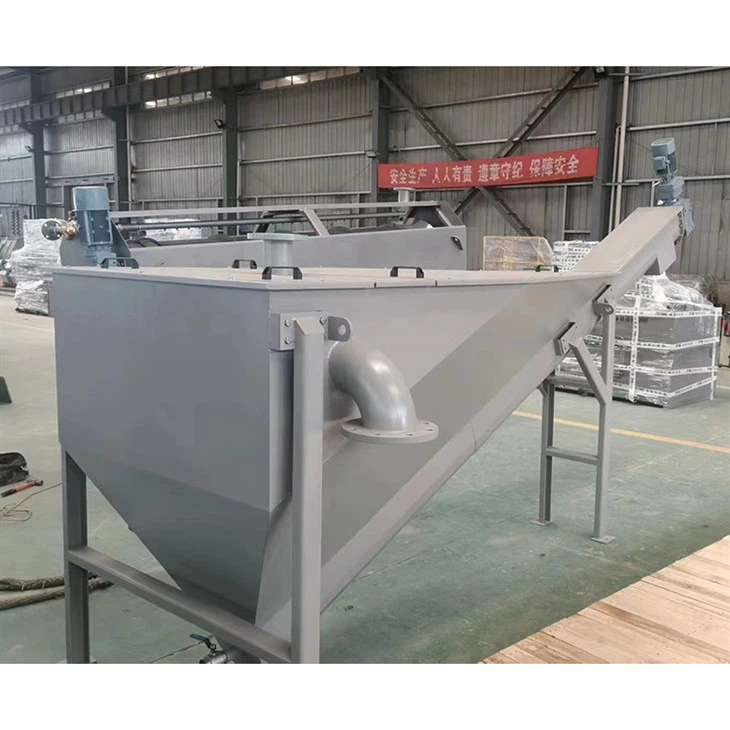
A grit classifier is used in industries such as wastewater treatment and mining to separate grit from other materials. Energy - saving modes for a grit classifier can include the use of a VFD to control the speed of the classifier's conveyor. By adjusting the speed based on the amount of grit to be classified, the energy consumption can be reduced.
An intelligent control system can also be applied to a grit classifier. Sensors can detect the level of grit in the classifier, and the control system can adjust the operation of the conveyor accordingly. This ensures that the classifier operates at optimal efficiency, saving both energy and resources.
Screw Conveyor
Screw conveyors are commonly used to transport granular or powdery materials. Energy - efficient belt designs can be adapted to screw conveyors to reduce the frictional resistance between the screw and the housing. Additionally, a VFD can be installed on the motor of the screw conveyor to adjust the speed according to the material flow rate.
Regenerative braking can also be beneficial for screw conveyors, especially in applications where the conveyor needs to stop and start frequently. By recovering the energy during braking, the overall energy consumption of the screw conveyor can be significantly reduced.
Conclusion
In conclusion, there are multiple energy - saving modes available for conveyor equipment, including Variable Frequency Drives, intelligent control systems, energy - efficient belt designs, regenerative braking, and gravity - assisted systems. These technologies not only reduce energy consumption and operating costs but also contribute to a more sustainable industrial environment.

As a conveyor equipment supplier, I am committed to providing our customers with the most energy - efficient solutions. If you are interested in upgrading your conveyor system or exploring energy - saving options for your new projects, I encourage you to contact us for a detailed discussion. Our team of experts can help you select the most suitable energy - saving modes based on your specific requirements and application scenarios.
References
- "Energy - Efficient Conveyor Systems: A Guide to Saving Energy and Reducing Costs" by Industry Insights Magazine
- "Advanced Technologies for Conveyor Energy Optimization" by the International Journal of Industrial Engineering
- "The Impact of Variable Frequency Drives on Conveyor Energy Consumption" by the Journal of Power and Energy Management