

Hey there! As a supplier of Screw Conveyors, I often get asked about how to calculate the capacity of these nifty machines. Well, you've come to the right place! In this blog post, I'm going to break it down for you in a way that's easy to understand.
First off, let's talk about what a Screw Conveyor is. A Screw Conveyor is a simple yet effective device used to move bulk materials from one place to another. It consists of a helical screw blade, called an auger, that rotates inside a trough or tube. As the screw turns, it pushes the material along the trough, allowing for efficient transportation.
Now, onto the main question: how do you calculate the capacity of a Screw Conveyor? There are a few key factors you need to consider, and I'll go through each one of them step by step.
1. Screw Diameter
The diameter of the screw is one of the most important factors in determining the capacity of a Screw Conveyor. A larger diameter screw can move more material than a smaller one. This is because a larger screw has a greater cross-sectional area, which means it can hold more material at any given time.
To calculate the cross-sectional area of the screw, you can use the formula for the area of a circle: A = πr², where A is the area and r is the radius of the screw. For example, if you have a screw with a diameter of 12 inches, the radius would be 6 inches. Plugging this into the formula, you get A = π(6)² = 113.1 square inches.
2. Screw Pitch
The pitch of the screw refers to the distance between each turn of the helix. A larger pitch means that the screw will move the material faster, but it may also result in a lower capacity. On the other hand, a smaller pitch will move the material more slowly, but it can increase the capacity.
The pitch of the screw is usually expressed in inches or millimeters. To calculate the volume of material that can be moved per revolution of the screw, you can use the formula: V = A x P, where V is the volume, A is the cross-sectional area of the screw, and P is the pitch.
For example, if you have a screw with a cross-sectional area of 113.1 square inches and a pitch of 6 inches, the volume of material that can be moved per revolution would be V = 113.1 x 6 = 678.6 cubic inches.
3. Screw Speed
The speed at which the screw rotates is another important factor in determining the capacity of a Screw Conveyor. A faster speed will move the material more quickly, but it may also cause the material to spill or become compacted. On the other hand, a slower speed will move the material more slowly, but it can help to prevent spillage and ensure a more consistent flow.
The speed of the screw is usually expressed in revolutions per minute (RPM). To calculate the capacity of the Screw Conveyor in cubic feet per hour (CFH), you can use the following formula:
CFH = (V x RPM x 60) / 1728
where V is the volume of material that can be moved per revolution of the screw, RPM is the speed of the screw in revolutions per minute, and 1728 is the number of cubic inches in a cubic foot.
For example, if you have a screw with a volume of 678.6 cubic inches per revolution and a speed of 30 RPM, the capacity of the Screw Conveyor would be:
CFH = (678.6 x 30 x 60) / 1728 = 703.75 cubic feet per hour
4. Material Characteristics
The characteristics of the material being conveyed also play a role in determining the capacity of a Screw Conveyor. Some materials are more free-flowing than others, which means they will move more easily through the conveyor. Other materials may be sticky or abrasive, which can make them more difficult to convey and may require special considerations.
For example, if you are conveying a free-flowing material like sand, you can expect a higher capacity than if you are conveying a sticky material like wet clay. Additionally, the density of the material will also affect the capacity. A denser material will require more power to move and may result in a lower capacity.
5. Incline Angle
The angle at which the Screw Conveyor is installed can also affect its capacity. A horizontal conveyor will generally have a higher capacity than an inclined or vertical conveyor. This is because gravity helps to move the material along the trough in a horizontal conveyor, while in an inclined or vertical conveyor, the screw has to work harder to overcome the force of gravity.
If you need to install a Screw Conveyor at an incline or vertically, you may need to adjust the design of the conveyor to ensure that it can handle the increased load. This may include using a larger diameter screw, a smaller pitch, or a higher speed.
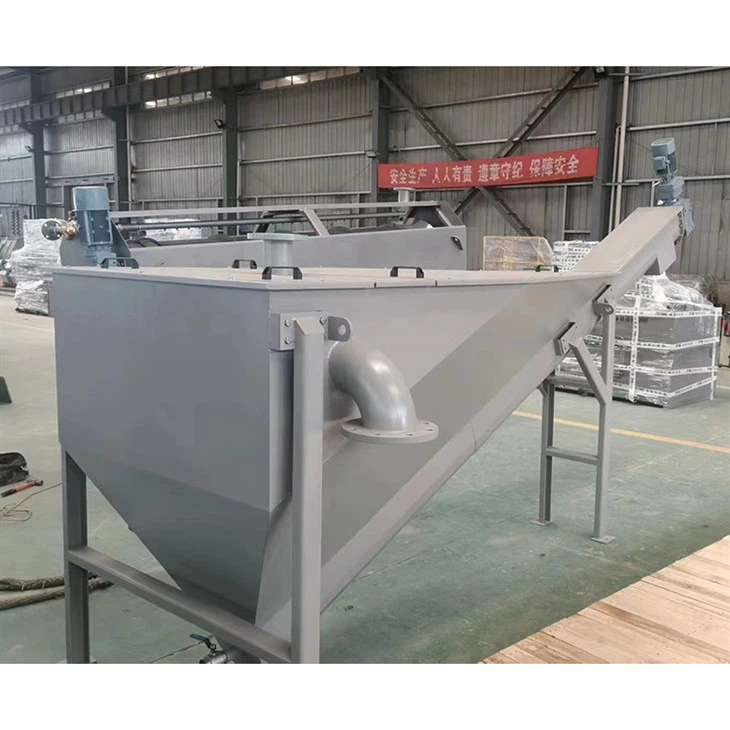

6. Other Considerations
In addition to the factors mentioned above, there are a few other things you need to consider when calculating the capacity of a Screw Conveyor. These include:
- Trough Loading: The amount of material that is loaded into the trough can affect the capacity of the conveyor. If the trough is overloaded, the material may spill or become compacted, which can reduce the capacity.
- Screw Fill Factor: The fill factor refers to the percentage of the screw's cross-sectional area that is filled with material. A higher fill factor will result in a higher capacity, but it may also increase the risk of spillage or compaction.
- Conveyor Length: The length of the conveyor can also affect its capacity. A longer conveyor will require more power to move the material, and it may also result in a lower capacity due to friction and other factors.
Putting It All Together
Now that you understand the key factors involved in calculating the capacity of a Screw Conveyor, let's put it all together with an example.
Suppose you have a Screw Conveyor with the following specifications:
- Screw Diameter: 12 inches
- Screw Pitch: 6 inches
- Screw Speed: 30 RPM
- Material: Sand (free-flowing)
- Trough Loading: 50%
- Screw Fill Factor: 70%
- Conveyor Length: 20 feet
First, let's calculate the cross-sectional area of the screw:
A = πr² = π(6)² = 113.1 square inches
Next, let's calculate the volume of material that can be moved per revolution of the screw:
V = A x P = 113.1 x 6 = 678.6 cubic inches
Now, let's calculate the capacity of the Screw Conveyor in cubic feet per hour:
CFH = (V x RPM x 60) / 1728 = (678.6 x 30 x 60) / 1728 = 703.75 cubic feet per hour
However, we need to take into account the trough loading and the screw fill factor. Since the trough loading is 50% and the screw fill factor is 70%, the actual capacity of the conveyor would be:
Actual CFH = 703.75 x 0.5 x 0.7 = 246.31 cubic feet per hour
So, based on these calculations, the capacity of the Screw Conveyor would be approximately 246.31 cubic feet per hour.
Conclusion
Calculating the capacity of a Screw Conveyor may seem like a complex task, but by understanding the key factors involved and using the right formulas, you can easily determine the capacity of your conveyor. Remember to consider the screw diameter, pitch, speed, material characteristics, incline angle, and other factors when making your calculations.
If you're in the market for a Screw Conveyor or a Grit Classifier, I'd be happy to help you find the right solution for your needs. Just reach out to me, and we can start a conversation about your project. Whether you're a small business or a large industrial operation, I'm here to provide you with high-quality equipment and expert advice.
References
- "Screw Conveyor Handbook" by the Conveyor Equipment Manufacturers Association (CEMA)
- "Bulk Material Handling: An Introduction" by John W. Carson III