

Hey there! As a supplier of Belt Filter Presses, I've seen firsthand how these machines can revolutionize the chemical industry. In this blog, I'm gonna share with you some of the key applications of a Belt Filter Press in the chemical sector.
1. Wastewater Treatment
One of the most common applications of a Belt Filter Press in the chemical industry is wastewater treatment. Chemical manufacturing processes often generate large amounts of wastewater that contain various contaminants such as heavy metals, organic compounds, and suspended solids. If not treated properly, this wastewater can pose a significant threat to the environment and human health.
A Belt Filter Press can effectively separate the solid and liquid components of the wastewater. The sludge is first conditioned with chemicals to improve its dewaterability. Then, it is fed onto the filter belt, where the pressure gradually increases as the belt moves through a series of rollers. This process squeezes out the water from the sludge, leaving behind a relatively dry cake that can be disposed of more easily.
For example, in a chemical plant that produces pesticides, the wastewater may contain high levels of pesticides, solvents, and heavy metals. By using a Belt Filter Press Belt Filter Press, the plant can reduce the volume of the sludge and remove a large portion of the contaminants, making the wastewater safer to discharge or reuse.
2. Product Separation
In addition to wastewater treatment, Belt Filter Presses are also used for product separation in the chemical industry. Many chemical processes involve the production of a mixture of solid and liquid products, and it is necessary to separate them to obtain the desired product.
For instance, in the production of pigments, the pigment particles are often suspended in a liquid medium. A Belt Filter Press can be used to separate the pigment particles from the liquid, resulting in a concentrated pigment cake. This cake can then be further processed to obtain the final pigment product.
Another example is the production of polymers. During the polymerization process, a polymer solution is formed, which contains the polymer and various additives. A Belt Filter Press can be used to separate the polymer from the solution, allowing for the recovery of the polymer and the reuse of the solvent.
3. Catalyst Recovery
Catalysts are widely used in the chemical industry to speed up chemical reactions. However, catalysts can be expensive, and it is important to recover and reuse them as much as possible. Belt Filter Presses can play a crucial role in catalyst recovery.
In some chemical processes, the catalyst is present in the form of a solid suspension in the reaction mixture. After the reaction is complete, the mixture is fed into a Belt Filter Press, where the catalyst particles are separated from the liquid. The recovered catalyst can then be regenerated and reused in subsequent reactions, reducing the cost of production.
For example, in the petroleum refining industry, catalysts are used in various processes such as hydrocracking and catalytic reforming. By using a Belt Filter Press to recover the catalysts, refineries can save a significant amount of money on catalyst replacement.
4. Filter Aid Separation
Filter aids are often used in the chemical industry to improve the filtration efficiency of Belt Filter Presses. Filter aids are materials such as diatomaceous earth or perlite that are added to the slurry to form a porous cake, which helps to trap the solid particles and prevent them from clogging the filter media.
After the filtration process is complete, it is necessary to separate the filter aid from the solid cake. A Belt Filter Press can be used for this purpose. The filter aid and the solid cake are first washed to remove any remaining impurities, and then the mixture is fed into the Belt Filter Press. The pressure exerted by the press separates the filter aid from the solid cake, allowing for the recovery and reuse of the filter aid.
5. Comparison with Other Dewatering Equipment
When it comes to dewatering in the chemical industry, there are several other types of equipment available, such as Screw Press Dehydrators Screw Press Dehydrator and Filter Presses Filter Press. Each type of equipment has its own advantages and disadvantages, and the choice of equipment depends on various factors such as the nature of the sludge, the required dewatering efficiency, and the cost.

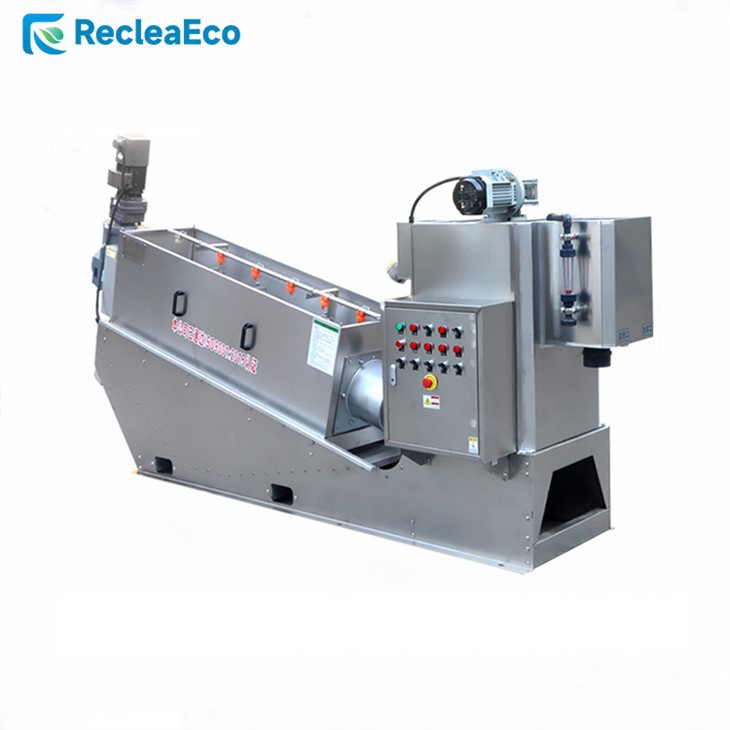
Compared to Screw Press Dehydrators, Belt Filter Presses generally offer higher dewatering efficiency and can handle a wider range of sludge types. Screw Press Dehydrators are more suitable for applications where the sludge has a relatively low solid content and a high viscosity.
On the other hand, Filter Presses are known for their high-pressure dewatering capabilities and can achieve a very low moisture content in the cake. However, Filter Presses are usually more expensive and require more maintenance compared to Belt Filter Presses.
Conclusion
In conclusion, Belt Filter Presses have a wide range of applications in the chemical industry, including wastewater treatment, product separation, catalyst recovery, and filter aid separation. They offer several advantages such as high dewatering efficiency, versatility, and relatively low cost.
If you're in the chemical industry and looking for an effective dewatering solution, I highly recommend considering a Belt Filter Press. Our company offers a variety of Belt Filter Presses that are designed to meet the specific needs of the chemical industry. Whether you need a small-scale press for a laboratory or a large-scale press for a industrial plant, we've got you covered.
If you're interested in learning more about our Belt Filter Presses or have any questions, please don't hesitate to reach out. We'd be more than happy to discuss your requirements and help you find the right solution for your business.
References
- Chemical Engineering Handbook, various editions
- Wastewater Treatment in the Chemical Industry: Best Practices and Case Studies
- Catalyst Recovery Techniques in Chemical Processes