

As a supplier of Sand Media Filters, I've witnessed firsthand the crucial role these devices play in various industries, from water treatment plants to industrial manufacturing. The efficiency of oil - water separation in a Sand Media Filter is a topic of great interest, as it directly impacts the quality of the treated water and the overall performance of the filtration system. In this blog, I'll delve into the key factors that affect the oil - water separation efficiency of a Sand Media Filter.
1. Media Characteristics
Particle Size and Distribution
The particle size of the sand media is one of the most significant factors. Smaller particle sizes generally provide a larger surface area for oil droplets to adhere to, which can enhance the separation efficiency. However, if the particles are too small, they may cause excessive pressure drop across the filter, reducing the flow rate and potentially clogging the filter. A well - graded sand media with a proper distribution of particle sizes can balance the surface area for oil capture and the flow characteristics. For example, a sand media with a narrow particle size distribution may lead to uneven flow and reduced contact between the oil - water mixture and the sand.
Media Shape and Porosity
The shape of the sand particles also matters. Angular particles tend to have more irregular surfaces, which can provide better adhesion sites for oil droplets compared to rounded particles. Additionally, the porosity of the sand media affects the flow path of the oil - water mixture. Higher porosity allows for faster flow but may reduce the contact time between the oil and the sand, while lower porosity can increase the contact time but may also increase the pressure drop.
2. Operating Conditions
Flow Rate
The flow rate of the oil - water mixture through the Sand Media Filter has a direct impact on the separation efficiency. A high flow rate may not allow sufficient time for the oil droplets to attach to the sand particles, resulting in lower separation efficiency. On the other hand, a very low flow rate may be uneconomical and may cause the filter to become overloaded with oil over time. Optimal flow rates need to be determined based on the specific characteristics of the oil - water mixture and the sand media. For instance, in a wastewater treatment plant, the flow rate may need to be adjusted according to the daily volume of incoming wastewater.
Temperature
Temperature can affect the viscosity of the oil and the water. As the temperature increases, the viscosity of the oil decreases, making it easier for the oil droplets to move and attach to the sand particles. However, extremely high temperatures may also cause changes in the properties of the sand media or the oil itself, such as evaporation or chemical reactions. In cold environments, the increased viscosity of the oil can make it more difficult for the oil to separate from the water, reducing the efficiency of the Sand Media Filter.
pH and Chemical Composition
The pH of the oil - water mixture can influence the surface charge of the sand particles and the oil droplets. A proper pH level can enhance the electrostatic attraction between the oil and the sand, improving the separation efficiency. Additionally, the presence of other chemicals in the mixture, such as surfactants or dissolved salts, can either promote or inhibit the oil - water separation process. Surfactants, for example, can reduce the surface tension between the oil and the water, making it more difficult for the oil droplets to attach to the sand.
3. Oil Properties
Oil Type and Viscosity
Different types of oils have different physical and chemical properties, which can affect their separation from water. For example, heavy oils with high viscosities are more difficult to separate compared to light oils. High - viscosity oils tend to form larger droplets that may be less likely to attach to the sand particles and may also cause more clogging in the filter. The chemical composition of the oil, such as the presence of polar or non - polar components, can also influence its interaction with the sand media.
Oil Droplet Size
The size of the oil droplets in the oil - water mixture is a critical factor. Smaller oil droplets have a larger surface - to - volume ratio, which can increase the likelihood of attachment to the sand particles. However, very small droplets may also be more difficult to separate due to Brownian motion and the influence of the surrounding fluid. Coalescence of small oil droplets into larger ones can improve the separation efficiency, and some Sand Media Filters may be designed to promote this coalescence process.
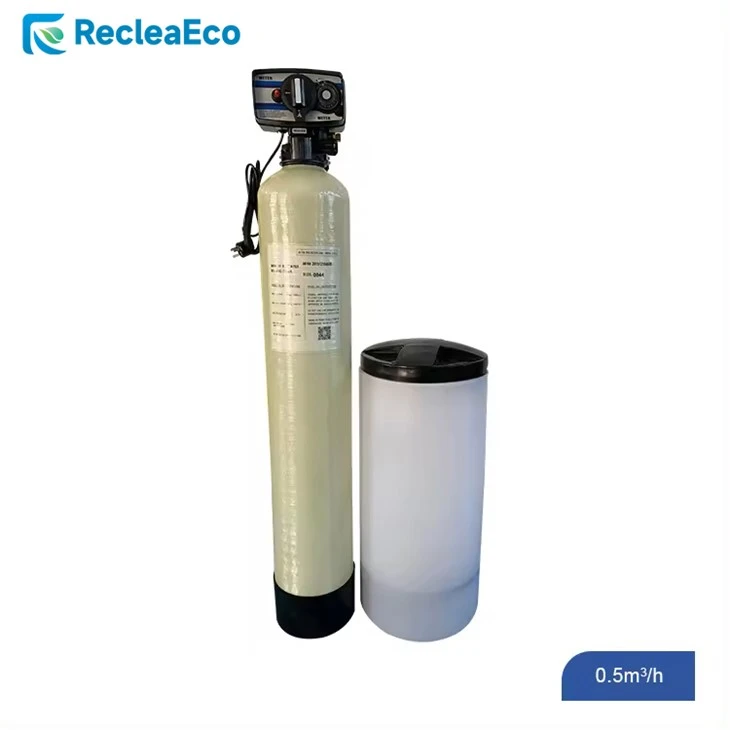

4. Pre - treatment and Post - treatment
Pre - treatment
Effective pre - treatment can significantly improve the oil - water separation efficiency of a Sand Media Filter. For example, using a Water Softener to remove hardness ions from the water can prevent scaling on the sand media, which can reduce its effectiveness. Additionally, pre - filters or Multi - Media Filter can be used to remove large particles or emulsified oil before the mixture enters the Sand Media Filter, reducing the load on the filter and improving its overall performance.
Post - treatment
Post - treatment processes may be required to further improve the quality of the separated water. This can include processes such as activated carbon adsorption to remove any remaining traces of oil or other contaminants. Post - treatment can also help to ensure that the treated water meets the required standards for discharge or reuse.
Conclusion
In conclusion, the oil - water separation efficiency of a Sand Media Filter is influenced by a variety of factors, including media characteristics, operating conditions, oil properties, and pre - and post - treatment processes. Understanding these factors is essential for optimizing the performance of the filter and ensuring the effective separation of oil from water.
If you're in need of a high - quality Sand Media Filter for your oil - water separation needs, or if you have any questions about improving the efficiency of your existing filtration system, I encourage you to reach out. We're here to provide you with the best solutions and support to meet your specific requirements.
References
- Crittenden, J. C., Trussell, R. R., Hand, D. W., Howe, K. J., & Tchobanoglous, G. (2012). Water Treatment: Principles and Design. John Wiley & Sons.
- Cheremisinoff, N. P. (2002). Handbook of Industrial Water Treatment. Butterworth - Heinemann.
- Wei, Y., & Bai, B. (2017). Advances in oil - water separation techniques: A review. Journal of Environmental Chemical Engineering, 5(1), 205 - 226.