

Hey there! As a supplier of Rotary Drum Screens, I've been getting a lot of questions lately about what makes these machines tick. So, I thought I'd break down the main components of a Rotary Drum Screen for you.
The Drum
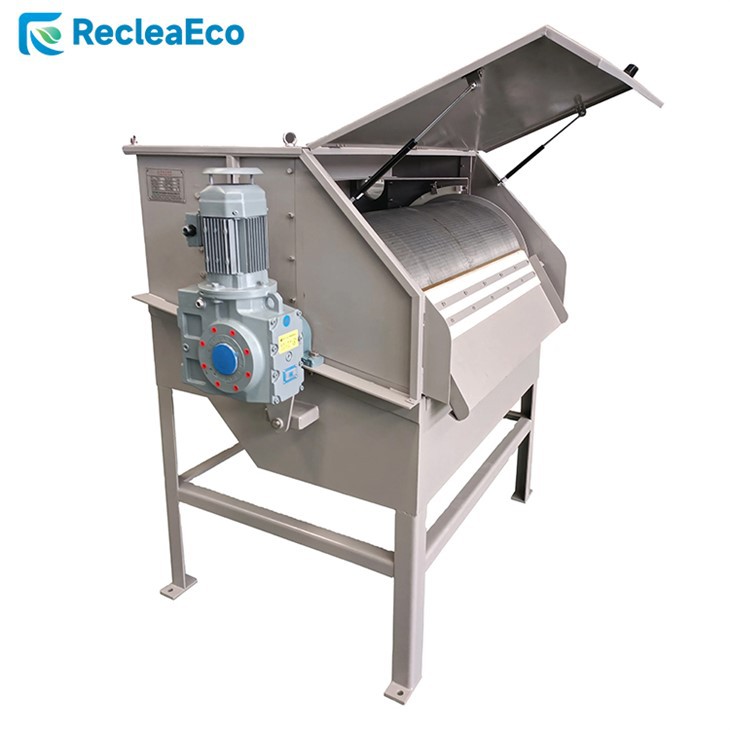
The heart of the Rotary Drum Screen is, of course, the drum itself. It's a cylindrical structure made up of a frame and a screening surface. The frame is usually constructed from sturdy materials like stainless steel or carbon steel, which can withstand the rigors of continuous operation. The screening surface, on the other hand, is where the magic happens. It's typically made of wedge wire or perforated plate, depending on the specific application and the size of the particles you're trying to separate.
The drum rotates on a central axis, driven by a motor and a gearbox. This rotation is crucial because it helps to keep the screening surface clean and prevents clogging. As the drum turns, the wastewater or other liquid being screened flows into the drum, and the solids are trapped on the screening surface while the clean liquid passes through.

The Drive System
The drive system is what powers the rotation of the drum. It usually consists of an electric motor, a gearbox, and a chain or belt drive. The motor provides the power, while the gearbox reduces the speed of the motor and increases the torque, allowing the drum to rotate smoothly and efficiently.
The chain or belt drive transfers the power from the gearbox to the drum. Chains are often used in heavy-duty applications because they're strong and durable, while belts are more commonly used in lighter applications because they're quieter and require less maintenance.
The Inlet and Outlet
The inlet is where the wastewater or other liquid being screened enters the drum. It's usually located at one end of the drum and is designed to distribute the flow evenly across the screening surface. This helps to ensure that the screening process is as efficient as possible.
The outlet is where the clean liquid exits the drum. It's located at the other end of the drum and is connected to a pipe or channel that carries the clean liquid away for further treatment or disposal.
The Cleaning System
One of the biggest challenges in operating a Rotary Drum Screen is keeping the screening surface clean. Over time, solids can build up on the surface, reducing the efficiency of the screen and increasing the risk of clogging. That's where the cleaning system comes in.
There are several different types of cleaning systems available, but the most common ones are brush cleaning systems and spray cleaning systems. Brush cleaning systems use rotating brushes to scrub the screening surface and remove the solids. Spray cleaning systems, on the other hand, use high-pressure water jets to blast the solids off the surface.
The Control System
The control system is what allows you to operate the Rotary Drum Screen safely and efficiently. It usually consists of a programmable logic controller (PLC) and a human-machine interface (HMI). The PLC is responsible for controlling the operation of the motor, the cleaning system, and other components of the screen. The HMI allows you to monitor the operation of the screen and make adjustments as needed.
Different Types of Rotary Drum Screens
There are two main types of Rotary Drum Screens: External Feeding Drum Screens and Internal Feeding Drum Screens.
External Feeding Drum Screens are designed to receive the wastewater or other liquid being screened from the outside of the drum. They're often used in applications where the flow rate is high and the solids content is relatively low. You can learn more about External Feeding Drum Screens here.
Internal Feeding Drum Screens, on the other hand, are designed to receive the wastewater or other liquid being screened from the inside of the drum. They're often used in applications where the flow rate is low and the solids content is relatively high. You can learn more about Internal Feeding Drum Screens here.
In addition to Rotary Drum Screens, we also offer Static Screens. Static Screens are a simpler and more cost-effective alternative to Rotary Drum Screens. They're often used in applications where the flow rate is low and the solids content is relatively high. You can learn more about Static Screens here.
Why Choose Our Rotary Drum Screens?
As a supplier of Rotary Drum Screens, we pride ourselves on offering high-quality products that are reliable, efficient, and easy to operate. Our screens are designed and manufactured to the highest standards, using the latest technology and materials.
We also offer a wide range of customization options, allowing you to choose the screen that's best suited to your specific application. Whether you need a small, compact screen for a residential wastewater treatment plant or a large, heavy-duty screen for an industrial application, we can help.
In addition to our high-quality products, we also offer excellent customer service. Our team of experienced engineers and technicians is available to provide you with technical support and advice, ensuring that you get the most out of your Rotary Drum Screen.
Contact Us for a Quote
If you're interested in learning more about our Rotary Drum Screens or if you have any questions, please don't hesitate to contact us. We'd be happy to provide you with a quote and answer any questions you may have.
Whether you're a wastewater treatment plant operator, an industrial engineer, or a contractor, we can help you find the right Rotary Drum Screen for your needs. So, what are you waiting for? Contact us today and let's get started!
References
- "Rotary Drum Screens: A Comprehensive Guide." Wastewater Treatment Solutions Magazine, 2023.
- "The Basics of Rotary Drum Screen Operation." Industrial Equipment Journal, 2022.
- "Advantages of Using Rotary Drum Screens in Wastewater Treatment." Environmental Engineering Review, 2021.