

How Do MBR Systems Redefine Wastewater Treatment?
MBR systems have revolutionized the advanced you water treatment technology owing to their effectiveness in efficiency and water quality. MBR systems are a progressive solution as worldwide environmental laws get stricter and the problem of freshwater shortage is acutely felt. It comprises bio-treatment with high technical membrane filtration to achieve increased elimination of contaminants and precise operational functionality.

MBR systems serve as an intermediate between typical wastewater treatment solutions and current concerns with sustainability. Due to the amenability of offering high quality of effluent with a relatively small area coverage, as well as versatility to match with various forms of application, WTPs have steadily increased demand across various sectors. This article examines the operational principles of MBR systems and opportunities for their use, as well as the potential of such systems to revolutionize water supply.
Discussing the factors that make MBR systems the future of wastewater treatment is discussed below. It is to that end that we will investigate the ways in which they work, their advantages and their use, thus finding out why they are the new darling of all industries and municipalities. If you interested our product and project design, please feel free to contact us!
[TOC]
What is the Membrane Bioreactor (MBR) Technology? (Our Product Page)
How can MBR Systems be Utilised in Wastewater Treatment?
What are the Benefits of MBR Systems?
How can an MBR System be Implemented Effortlessly?
What is the Membrane Bioreactor (MBR) Technology?
Membrane Bioreactors (MBRs) are a development of the secondary biological wastewater treatment systems that includes the membrane filtration process. MBRs differ from older systems where the solid-liquid separation is based on countering the forces of gravity that cause the consolidated particles to settle at the bottom of the reservoirs Applying membrane techniques, MBRs are very efficient with regard to filtration. These are normally of polymeric or ceramic construction and are intended to capture suspended solid matter, pathogens, and organic materials while permissive to the passage of clear water.

The MBR configuration generally comprises two key components: a biological reactor and a membrane filtration unit respectively. The biological reactor can be aerobic, anaerobic or anoxic, and its function is to convert the organic contaminants by using microorganisms reducing the risk and impact of these contaminants. Membrane filtration unit that utilizes either hollow fiber or flat sheet membrane displaces the conventional sedimentation tanks providing much better solid separation and occupying much less space.
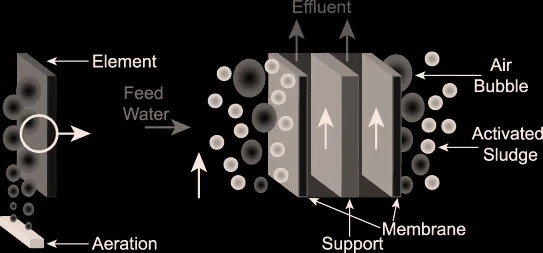
This integration allows MBR systems to deliver high treatment performance and quality of effluent water making it appropriate for plant addressing water recycling or strict for discharge requirements. As already illustrated in the case of industrial WWTPs, municipal sewage treatment plants have also turned to MBRs as a cornerstone of modern WW treatment, capable to meet and solve both, environmental and operational issues with high degree of effectiveness (Tchobanoglous et al., 2014).
How can MBR Systems be Utilised in Wastewater Treatment?
MBR systems are integrated taking and biological degradation alongside advanced membrane technologies to provide maximal wastewater treatment and resource recovery. The treatment starts from the biological reactor that digest the organic pollutant through metabolism by microorganisms. These microorganisms function efficiently in a stabilized environment, where it synthesizes or metabolises various high molecular weight organic materials into carbondi oxide, water and stabilized biomass. The biological reactor may well function under precisely defined operational conditions such as DO and temperature to enhance conditions for microbial processing of pollutants.

The second phase is the membrane filtration unit which prevents suspended substances in water from going through the unit; the unit acts as a filter. Commonly used membranes in MBR system have pore size of between 0.1 and 0.4 micron to allow microfiltration or ultrafiltration to occur. During the period that wastewater is filtered through them, good quality water with no suspended particles and pathogenic organisms is obtained on the other side of the membranes.
Another characteristic of MBR systems is the principle of operating the biological reactor at high mixed liquor suspended solids (MLSS) concentrations. This capability allows the system to accept higher organic and hydraulic loads than conventional systems. Besides, MBRs consist of cleaning technologies such as air scouring and backflushing to reduce membrane fouling and ensure high effectiveness of the membranes. Both design factors make for smoother, faster, and safer continued operation with less time required for maintenance.
Besides increasing the effectiveness of the treatment, the MBR systems at the same time make it completely unnecessary to build secondary clarifiers and other stages of such a tertiary treatment. This integrated approach leads to scale reduction of the facility, low operation costs, and environmental friendly degradation of waste. Such use in areas with high standards of water quality has therefore cemented their relevance and versatility in meeting world water issues (Eckenfelder, 2009; Metcalf & Eddy, 2013).
What are the benefits of MBR Systems?
1. Superior Effluent Quality: MBR systems produce very high quality effluent that can meet or even exceed discharge or reuse water standards. Because of that they are particularly appropriate for use in use such as; Le irrigation, industrial uses, and the augmentation of drinking water supply (Eckenfelder, 2009).
2. Compact Design: This aspect shows that MBR systems offer a major advantage over traditional treatment plants as they occupy much less space than the conventional clarifiers and sand filter. There are predicative benefits of this compact design in that it is most suitable for deployment within an urban setting or to retrofit an existing plant.
3. Enhanced Process Efficiency: It is because combining of biological and membrane treatment processes makes the MBR systems able to accept higher levels of organic load and fluctuating characteristics of influent flows, and still maintain stable conditions (Neyens & Baeyens, 2003).
4. Environmental Benefits: In view of avoiding raw water abstraction, MBR systems contribute to prudent water resources management through minimisation of wastage through reuse. This is particularly because they do not use much chemicals and they produce very little sludge to harm the environment.
How can an MBR System be Implemented Effortlessly?
Successful implementation of an MBR system depends highly on site specific factors and careful planning.
Key steps include:
1. Conducting a Needs Assessment: Selection of an appropriate MBR configuration is evaluated based on the influent characteristics, desired effluent quality, and treatment capacity.
2. Optimizing Design Parameters: Optimal performance requires tailor made factors such as membrane type, aeration rate, hydraulic retention time, etc.
3. Ensuring Proper Operation and Maintenance: Membrane integrity, fouling, and cleaning process monitoring as well as maintaining efficiency and system lifespan are imperative.
4. Training Operators: But for MBRs to work, skilled operators are essential to troubleshoot and manage system problems and keeping within regulatory compliance.
Conclusion
MBR systems constitute a major step forward in wastewater treatment technology, providing superior treatment performance, lower cost of operations, and greater environmental and economic benefits compared to conventional application. They integrate biological processes with advanced membrane filtration to provide a robust solution for water needs in a resource constrained world. MBR systems are already on the table for industries and municipalities ready to not only meet current demands, but future proof their operations as regulations and environmental concerns change.
References
- 1. Eckenfelder, W. W. (2009). Industrial Water Pollution Control. McGraw-Hill Education.
- 2. Metcalf & Eddy. (2013). Wastewater Engineering: Treatment and Resource Recovery. McGraw-Hill Education.
- 3. Neyens, E., & Baeyens, J. (2003). A review of thermal sludge pre-treatment processes to improve dewaterability. Water Research, 37(11), 2208–2222.
- 4. Tchobanoglous, G., Burton, F. L., & Stensel, H. D. (2014). Wastewater Engineering: Treatment and Reuse. McGraw-Hill Education.