

Hey there! As a cartridge filter supplier, I often get asked the question: "How often should a cartridge filter be replaced?" Well, there isn't a one - size - fits - all answer to this question, as it depends on several factors. Let's dive right in and explore what these factors are and how they affect the replacement frequency.
First off, let's talk about the type of contaminants you're filtering. If you're dealing with large, coarse particles, the filter might clog up faster compared to when filtering finer contaminants. For instance, in an industrial setting where you're filtering out sand or debris from water, the filter will get dirty pretty quickly. On the other hand, if you're filtering out microscopic particles like bacteria or viruses in a water purification system, the rate of clogging will be slower.
The flow rate of the fluid passing through the filter is another crucial factor. A high flow rate means more fluid is passing through the filter in a given time. This can cause the filter to accumulate contaminants at a faster pace. So, if you have a system with a high flow rate, you'll likely need to replace the cartridge filter more often. For example, in a large - scale manufacturing plant where water is being pumped through the filters at a rapid rate, the filters will reach their capacity sooner than in a small - scale operation with a lower flow rate.
The quality of the incoming fluid also matters a great deal. If the fluid has a high concentration of contaminants, the filter will have to work harder and will get filled up more quickly. Take a look at a swimming pool. If the pool is located in an area with a lot of dust, leaves, and other debris, the cartridge filter in the pool's filtration system will need to be replaced more frequently compared to a pool in a cleaner environment.
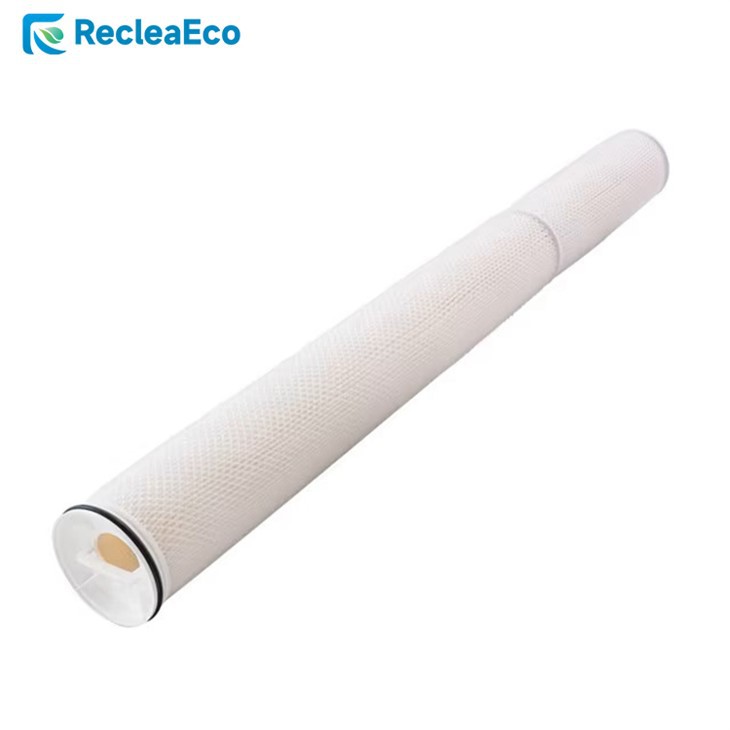
Now, let's consider the filter's capacity. Different cartridge filters have different capacities to hold contaminants. A High Flow Filter Cartridge is designed to handle a larger volume of fluid and contaminants. These filters are often used in applications where there's a high demand for filtration, such as in power plants or large - scale water treatment facilities. Due to their larger capacity, they may not need to be replaced as often as smaller, standard - capacity filters.
Another aspect is the operating environment. Filters used in harsh environments, like those exposed to extreme temperatures, chemicals, or high humidity, may degrade faster. For example, in a chemical processing plant, the chemicals can react with the filter material, reducing its effectiveness and lifespan. In such cases, you might need to replace the filter more frequently to ensure proper filtration.
So, how can you tell when it's time to replace the cartridge filter? One of the most common signs is a drop in the flow rate. If you notice that the fluid is flowing through the system more slowly than usual, it could be because the filter is clogged. You can also check the pressure differential across the filter. An increase in the pressure differential indicates that the filter is restricting the flow and is likely full of contaminants.
Some filters come with built - in indicators that show when they need to be replaced. These indicators can be visual, like a color - changing strip, or electronic, which send a signal to a control panel. However, not all filters have these features, so in those cases, you'll have to rely on regular inspections and monitoring of the system's performance.
As a general rule of thumb, for light - duty applications, like a small home aquarium filter, you might be able to get away with replacing the cartridge filter every 3 - 6 months. In a medium - duty application, such as a small - scale water treatment system for a commercial building, the filter could be replaced every 1 - 3 months. For heavy - duty industrial applications, the replacement interval could be as short as a few weeks or even days, depending on the factors we discussed earlier.
It's also important to note that proper maintenance can extend the life of the cartridge filter. Regularly cleaning the Filter Housing can prevent the build - up of contaminants around the filter, which can in turn reduce the strain on the filter itself. You can use a mild detergent and water to clean the housing, and make sure to rinse it thoroughly before reinstalling the filter.
In addition to cleaning the housing, you can also backwash the filter in some cases. Backwashing involves reversing the flow of fluid through the filter to dislodge and remove the trapped contaminants. This can be an effective way to extend the filter's life, but it's not suitable for all types of cartridge filters.
If you're unsure about the replacement frequency for your specific application, don't hesitate to reach out to us. We're here to help you figure out the best replacement schedule based on your unique needs. As a cartridge filter supplier, we have a wealth of experience and knowledge in this area. We can provide you with the right type of filter for your application and offer advice on how to maintain it properly.
Whether you're a small business owner looking for a reliable filtration solution or an industrial operator in need of high - performance filters, we've got you covered. Our team of experts can work with you to understand your requirements and recommend the most suitable cartridge filters. We offer a wide range of filters, including High Flow Filter Cartridge, designed to meet the diverse needs of our customers.

If you're interested in learning more about our products or have any questions regarding cartridge filter replacement, feel free to get in touch with us. We're always happy to have a chat and discuss how we can help you with your filtration needs. Let's work together to ensure that your filtration system runs smoothly and efficiently.
References
- Filtration Handbook, various editions
- Industry reports on cartridge filter usage and maintenance