

Hey there! As a supplier of submersible mixers, I'm super excited to share with you all about the working principle of these nifty devices. So, let's dive right in!
Basic Structure of a Submersible Mixer
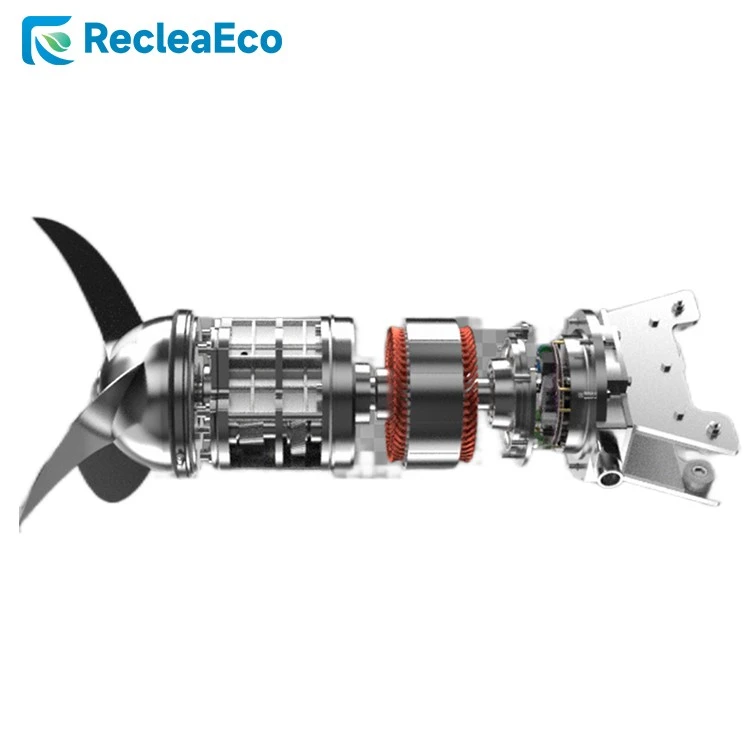
First off, let's take a look at what a submersible mixer is made of. It mainly consists of a motor, a gearbox (in some models), an impeller, and a housing. The motor is the power source that drives the whole thing. It's usually sealed tightly to prevent water from getting in and causing damage. The gearbox, if present, helps to adjust the speed and torque of the impeller. The impeller is the key component that creates the mixing action, and the housing protects all the internal parts from the surrounding environment.
How the Motor Works
The motor in a submersible mixer is typically an electric motor. When you turn on the power, an electrical current flows through the motor's coils. This creates a magnetic field, which interacts with the magnetic field of the motor's permanent magnets or electromagnets. The interaction between these magnetic fields causes the motor's shaft to rotate. The speed of the rotation depends on the design of the motor and the electrical power supplied to it.
Role of the Gearbox
Not all submersible mixers have a gearbox, but for those that do, it plays an important role. The gearbox is like a transmission system. It can change the speed and torque of the motor's output. For example, if you need a high torque to mix a thick or viscous liquid, the gearbox can reduce the speed of the impeller while increasing the torque. On the other hand, if you're dealing with a thin liquid and need a high - speed mixing action, the gearbox can adjust the output accordingly.
The Magic of the Impeller
Now, let's talk about the star of the show - the impeller. The impeller is a set of blades that rotate rapidly when driven by the motor. As the impeller spins, it pushes the liquid around it. This creates a flow of liquid in the tank or basin where the submersible mixer is installed.
There are different types of impellers, and each type creates a different flow pattern. For instance, a propeller - type impeller creates an axial flow, which means the liquid moves in a straight line parallel to the axis of the impeller. This type of impeller is great for applications where you need to move a large volume of liquid quickly.
A radial - flow impeller, on the other hand, pushes the liquid outwards in a radial direction. This creates a circular flow pattern in the tank. Radial - flow impellers are often used when you need to create a strong mixing action in a relatively small area.
Creating a Mixing Zone
When the impeller creates a flow of liquid, it also creates a mixing zone. The size and shape of this mixing zone depend on several factors, such as the type of impeller, the speed of rotation, and the size and shape of the tank. In a well - designed mixing system, the mixing zone should cover as much of the tank as possible to ensure uniform mixing.
The flow of liquid created by the impeller also helps to break up any clumps or aggregates in the liquid. For example, in a wastewater treatment plant, the submersible mixer can break up sludge clumps, ensuring that the treatment chemicals are evenly distributed throughout the wastewater.
Applications of Submersible Mixers
Submersible mixers have a wide range of applications. In wastewater treatment plants, they are used to mix chemicals with wastewater, prevent sludge from settling at the bottom of tanks, and promote the growth of beneficial bacteria. In the food and beverage industry, they can be used to mix ingredients during the production process.
If you're interested in some specific types of submersible mixers, we have the Ultra - Energy - Saving Submersible Mixer, which is designed to save energy while providing efficient mixing. And for MBBR (Moving Bed Biofilm Reactor) tanks, our Submersible Mixer for MBBR Tank is a great choice. We also offer Vertical Agitator for applications where a different type of mixing action is required.
Factors Affecting Mixing Performance
There are several factors that can affect the performance of a submersible mixer. The viscosity of the liquid is one of the most important factors. Thicker liquids require more power and torque to mix effectively. The density of the liquid also matters. Heavier liquids may need a stronger impeller and a more powerful motor.

The size and shape of the tank or basin where the mixer is installed can also have a big impact. A large tank may require multiple mixers to ensure uniform mixing, while an irregularly shaped tank may need special impeller designs to create an effective mixing pattern.
Maintenance and Troubleshooting
To keep your submersible mixer working properly, regular maintenance is essential. This includes checking the motor for proper electrical connections, inspecting the impeller for damage or wear, and ensuring that the seals are intact to prevent water leakage.
If you encounter problems with your submersible mixer, such as unusual noises or a decrease in mixing performance, it's important to troubleshoot the issue promptly. Sometimes, the problem may be as simple as a loose connection or a clogged impeller. In other cases, it may require more in - depth inspection and repair.
Conclusion
So, there you have it - the working principle of a submersible mixer. These devices are really amazing when you think about how they can create such effective mixing actions in various applications. Whether you're in the wastewater treatment industry, food and beverage production, or any other field that requires liquid mixing, a submersible mixer can be a valuable asset.
If you're interested in purchasing a submersible mixer or have any questions about our products, don't hesitate to reach out. We're here to help you find the perfect mixing solution for your needs.
References
- Perry, R. H., & Green, D. W. (1997). Perry's Chemical Engineers' Handbook. McGraw - Hill.
- Metcalf & Eddy. (2003). Wastewater Engineering: Treatment and Reuse. McGraw - Hill.