

Hey there! If you're in the market for wastewater mixers, you've probably wondered what materials they're usually made of. Well, you're in the right place! As a wastewater mixer supplier, I'm here to break it down for you.
Common Materials for Wastewater Mixers
Stainless Steel
Stainless steel is one of the most popular materials for wastewater mixers. It's corrosion - resistant, which is a big deal when dealing with wastewater that can be full of all sorts of chemicals and contaminants. This material can stand up to the harsh environments and the constant exposure to water without rusting or degrading quickly.
The chromium in stainless steel forms a thin, protective oxide layer on the surface. This layer acts as a shield, preventing the steel from reacting with the wastewater and other substances. Different grades of stainless steel are used depending on the specific application. For example, in less aggressive wastewater, a 304 - grade stainless steel might be sufficient. But in highly corrosive environments, like wastewater from industrial processes with high acid or salt content, 316 - grade stainless steel is often the better choice.
Cast Iron
Cast iron has been used in the manufacturing of wastewater mixers for a long time. It's strong and durable, able to withstand the mechanical stresses associated with mixing wastewater. Cast iron is also relatively inexpensive compared to some other materials, which makes it an attractive option for budget - conscious projects.
However, cast iron does have some drawbacks. It's prone to corrosion, especially in wet and acidic environments. To counter this, manufacturers often coat cast - iron mixers with special protective paints or coatings. These coatings act as a barrier between the cast iron and the wastewater, preventing direct contact and reducing the risk of corrosion.
Fiberglass - Reinforced Plastic (FRP)
FRP is becoming increasingly popular in the wastewater mixing industry. It combines the strength of glass fibers with the versatility of plastic resins. This results in a material that is lightweight yet strong. Being lightweight makes FRP mixers easier to install and transport compared to those made of heavier metals.
FRP is also highly resistant to corrosion. It can handle a wide range of chemical substances commonly found in wastewater without deteriorating. Additionally, it has good electrical insulation properties, which can be an advantage in some wastewater treatment facilities.
Polypropylene
Polypropylene is another plastic material used in wastewater mixers. It's resistant to many chemicals and has a relatively low cost. Polypropylene mixers are often used in applications where the wastewater is not too aggressive and where simplicity and affordability are key.
This material is also non - toxic, which is important in wastewater treatment processes where the water might eventually be released into the environment or used for other purposes. Polypropylene can be molded easily into complex shapes, allowing for the design of efficient mixing impellers.
How the Material Affects the Type of Mixer
Vertical Agitator
When it comes to Vertical Agitator, the choice of material is crucial. For vertical agitators that are installed in large, open basins or tanks, stainless steel is often the top pick. The corrosion resistance of stainless steel ensures a long service life, even when the agitator is constantly submerged in wastewater.
The strength of the material also allows for the construction of large - scale agitators that can handle high - volume mixing. The impellers of vertical agitators need to be robust, and stainless steel can provide the necessary structural integrity.
Submersible Thruster
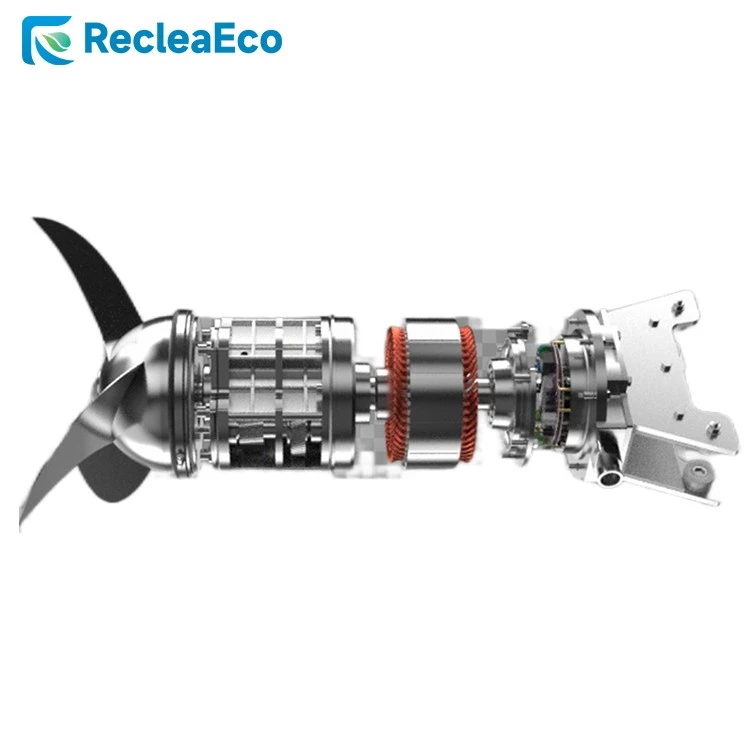
Submersible Thrusters are designed to be fully submerged in wastewater. They require a material that can withstand the high hydrostatic pressure and the corrosive nature of the water. FRP is a great option for submersible thrusters. Its lightweight nature doesn't add excessive stress to the motor and other components, while its corrosion resistance ensures that the thruster can operate efficiently for a long time.
Polypropylene can also be used in some submersible thrusters, especially for smaller - scale applications or in less harsh wastewater environments.
Ultra - Energy - Saving Submersible Mixer
For Ultra - Energy - Saving Submersible Mixer, the material choice can impact both the mixer's performance and its energy efficiency. Stainless steel is often used for the motor housing and the impellers as it provides good thermal conductivity. This helps in dissipating heat generated during operation, which is important for the long - term reliability of the motor.
The smooth surface of stainless steel can also minimize the drag on the impellers, reducing the energy required for mixing. Polypropylene or FRP can be used for other parts of the mixer to keep the overall weight down and improve corrosion resistance.
Factors to Consider When Choosing the Material
Corrosion Resistance
As mentioned earlier, wastewater can be corrosive. You need to assess the specific composition of the wastewater in your treatment facility. If it contains high levels of acids, salts, or other corrosive substances, materials like stainless steel, FRP, or coated cast iron are better choices.
Strength and Durability
The mixer needs to be strong enough to handle the mechanical forces involved in the mixing process. If you have a large - scale wastewater treatment operation with high - volume mixing requirements, you'll need a material like stainless steel or cast iron that can provide the necessary strength.
Cost
Cost is always a factor in any project. While stainless steel offers excellent performance, it can be more expensive than cast iron or polypropylene. You need to balance the cost with the performance and longevity requirements of your wastewater mixer.

Weight
For some applications, especially those where the mixer needs to be easily installed or moved, the weight of the material matters. Lightweight materials like FRP and polypropylene are more suitable in such cases.
Wrapping Up
So, there you have it! The materials used in wastewater mixers play a vital role in their performance, durability, and cost - effectiveness. Depending on your specific needs, whether it's a Vertical Agitator, Submersible Thruster, or Ultra - Energy - Saving Submersible Mixer, you can choose the right material to ensure the best results.
If you're interested in learning more about the wastewater mixers we offer or need help in choosing the right one for your application, don't hesitate to reach out. We're here to assist you in making the best decision for your wastewater treatment needs.
References
- Perry, R. H., & Green, D. W. (Eds.). (2008). Perry's Chemical Engineers' Handbook. McGraw - Hill Professional.
- Tchobanoglous, G., Burton, F. L., & Stensel, H. D. (2003). Wastewater Engineering: Treatment and Reuse. McGraw - Hill.